
The investigation / four field moves
Turn a night of movement into a place to look.
Sensors record when movement happens. The floorplan shows where those detections occurred. The pest professional decides what the sequence means on site.
01 / Map the site
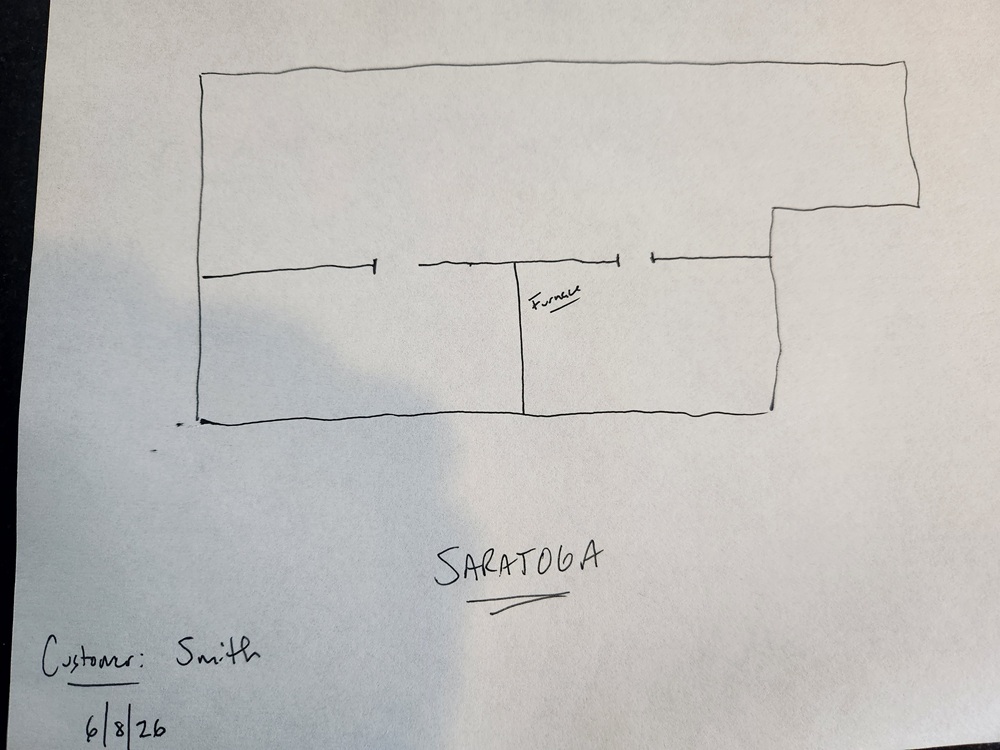
Start with the space people already know.
A simple sketch is enough. Label the sensor positions so the overnight record has physical context.
02 / Place the sensors
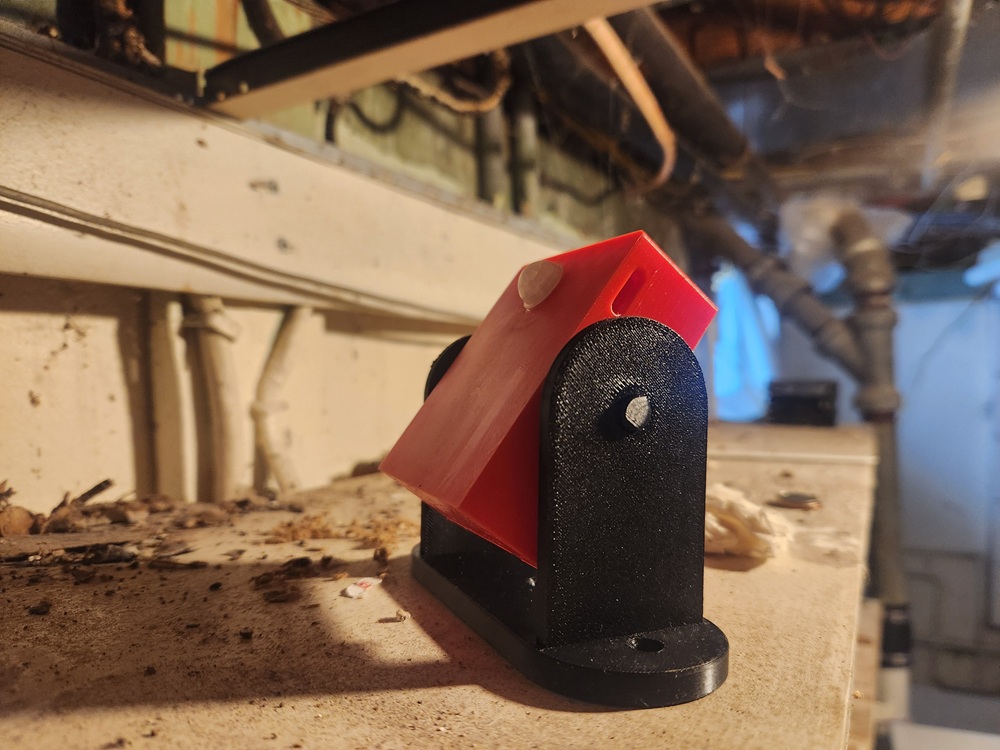
Aim at the unresolved area.
Position the labeled sensors around the suspected route, then connect the base station to the site’s 2.4 GHz Wi-Fi network.
Sensor positionsRecorded on the floorplan
Base stationConnected on site
03 / Review the night
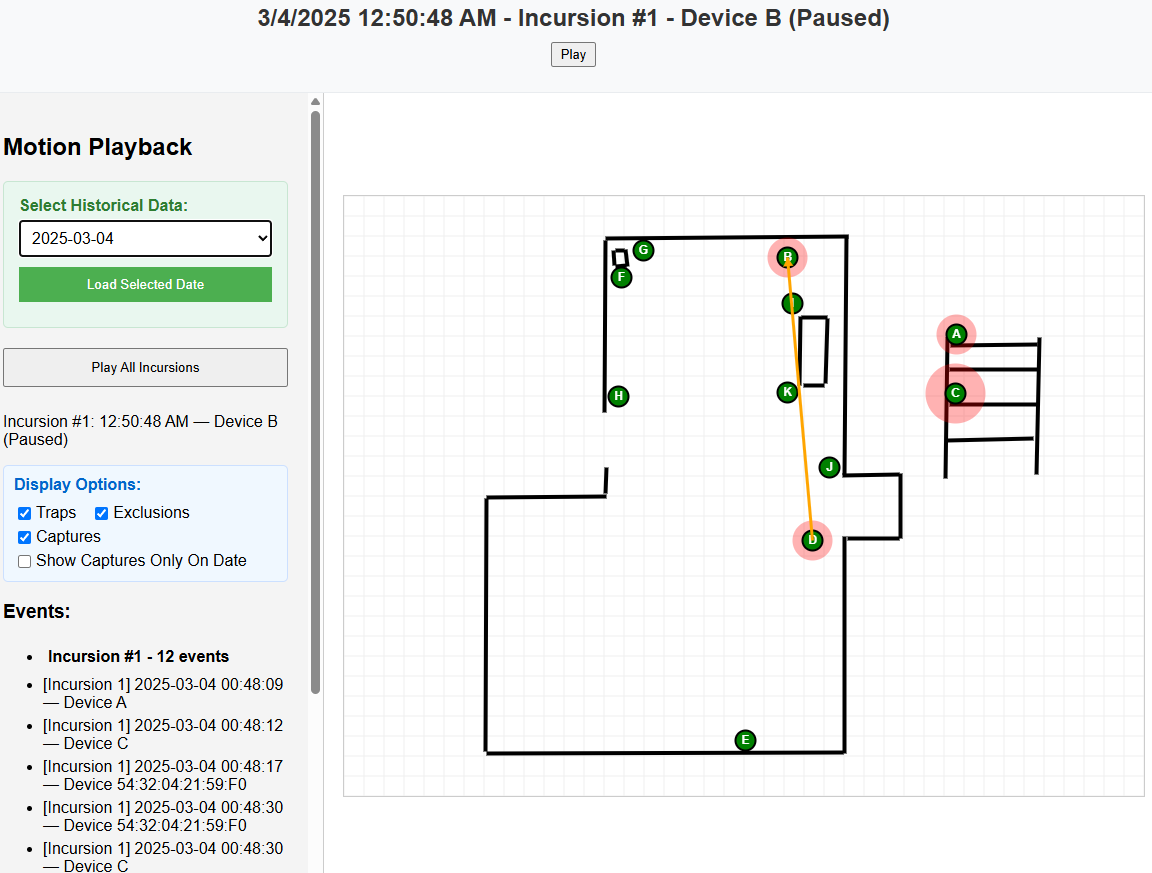
See the detections in sequence.
A detection is not a sighting. A connected path is an inferred sequence. Physical inspection is what verifies the condition.
04 / Inspect, act, compare
Let evidence change the next field move.
- 01Inspect the concentrated area.
- 02Record the corrective action.
- 03Compare a later monitoring night.
RodentRadar narrows the search. It does not replace the judgment of the person standing in the space.